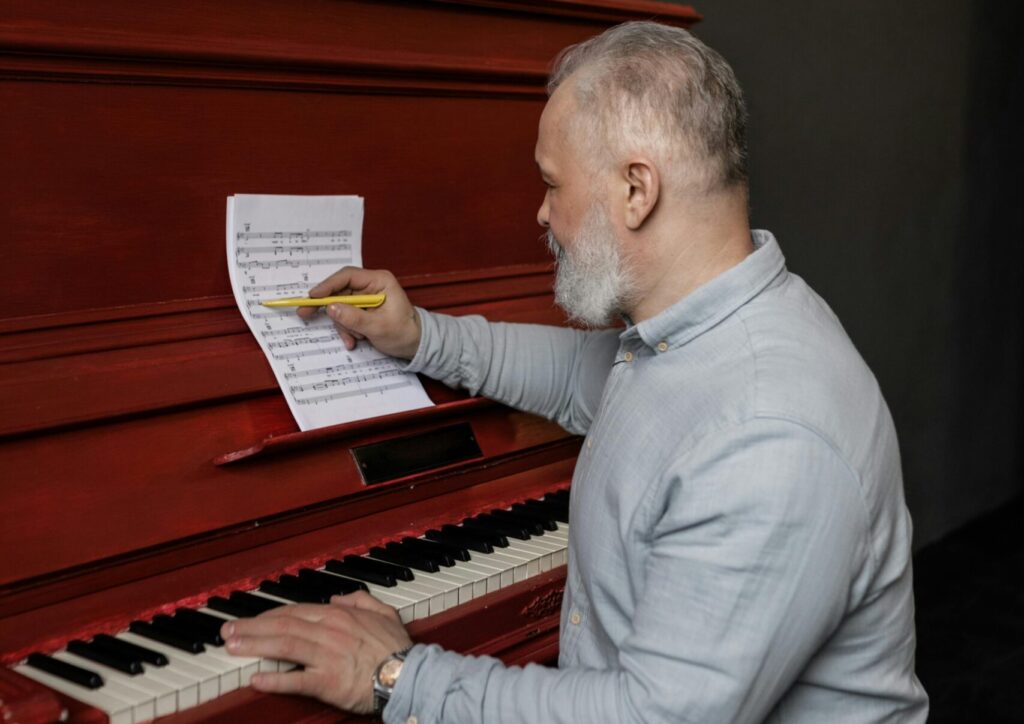
For decades, the idea that only children can truly master the piano has discouraged thousands of adults from ever giving the instrument a chance. Yet this belief, rooted more in tradition than in actual evidence, is increasingly disproven by teachers, neuroscientists and the thousands of adult beginners who start every year and progress with remarkable speed.
Learning piano as an adult is not simply possible—in many cases, it can be more efficient, more rewarding and more intentional than learning at a younger age. Adults bring motivation, discipline and musical curiosity that dramatically accelerate their progress, even if they start from zero.
This guide explores why age is far from a barrier, what actually determines your success, and how much time you need to become a confident pianist.
The Myth of the “Perfect Age” to Learn Piano
Many people imagine musical training as something that must begin during childhood to be effective. And while it is true that children learn some motor skills quickly, this does not determine the long-term outcome of one’s musical journey. What matters most is not the age at which you start, but the time you spend practicing with intention.
Adults have several advantages that children simply do not possess: they understand what they want to achieve, they are capable of sustained concentration, and they can structure their own learning process. This clarity of purpose often translates into faster progress in the first months of study. Whereas children learn because they “must,” adults learn because they want to—an enormous psychological advantage.
Why Adults Learn Piano So Effectively
One of the keys to adult progress is consistency. Adults who incorporate a short, predictable daily practice session—ten minutes before work, fifteen minutes after dinner—build a mental and physical habit that compounds over time. The brain thrives on routine: the more regular the practice, the faster it recognises patterns, consolidates movements and internalises musical language.
Technique also develops more efficiently in adulthood. Adult learners are capable of analysing their own movements, correcting hand positions and identifying weaknesses with a level of self-awareness that children cannot match. This leads to fewer “bad habits” early on and a more deliberate approach to learning.
Another major advantage is freedom of choice. Adults can learn the music they love: film soundtracks, pop ballads, jazz standards, classical works or video-game themes. This personal connection is often the deciding factor in whether someone sticks with the instrument long term. When you play music that excites you, you practice more, and the cycle of motivation becomes self-sustaining.
The Importance of Structured, Intentional Practice
Progress at the piano is rarely about practicing longer; it is about practicing better. Many adult beginners sit down at the instrument and play whatever comes to mind, hoping that repetition alone will lead to mastery. But real improvement comes from focused, specific work.
A productive practice session usually includes a brief technical warm-up—simple scales, arpeggios or finger exercises—to prepare the hands and sharpen coordination. From there, the most effective approach is to break music into small, manageable sections: a difficult left-hand pattern, a chord progression, a four-bar phrase. Adults excel at this type of analytical practice, and the results are evident almost immediately.
Equally important is the refinement stage: revisiting pieces you already know, polishing transitions and improving tone. This part of practice not only solidifies skill but also brings a sense of accomplishment that keeps motivation high.
How Long Does It Really Take to Learn Piano as an Adult?
The timeline varies from person to person, but certain patterns are extremely consistent among adult learners.
Within the first 8 to 12 weeks, most adults can develop a reliable technical foundation. Something as specific as playing all twelve major scales at a moderate tempo—a benchmark often associated with intermediate technique—can realistically be achieved in about three months with around ten minutes of focused practice per day.
Learning to play by ear is another concern for many beginners. Adults who already have some experience playing songs with both hands typically unlock this skill in four months. Complete beginners often need around six months, depending on how much they actively listen to music and recognise patterns.
As for learning songs, the range is wide but predictable:
- Simple pieces can often be learned in days or weeks.
- Intermediate works may require two to three months.
- Complex classical or jazz pieces can take much longer, sometimes years, just as they do for young learners.
If your goal is simply to “sound good” when playing for others—which for many adults is the dream—you can reach this point surprisingly quickly. With twenty minutes of daily practice, most adults play confidently within six months.
What Actually Determines Your Success
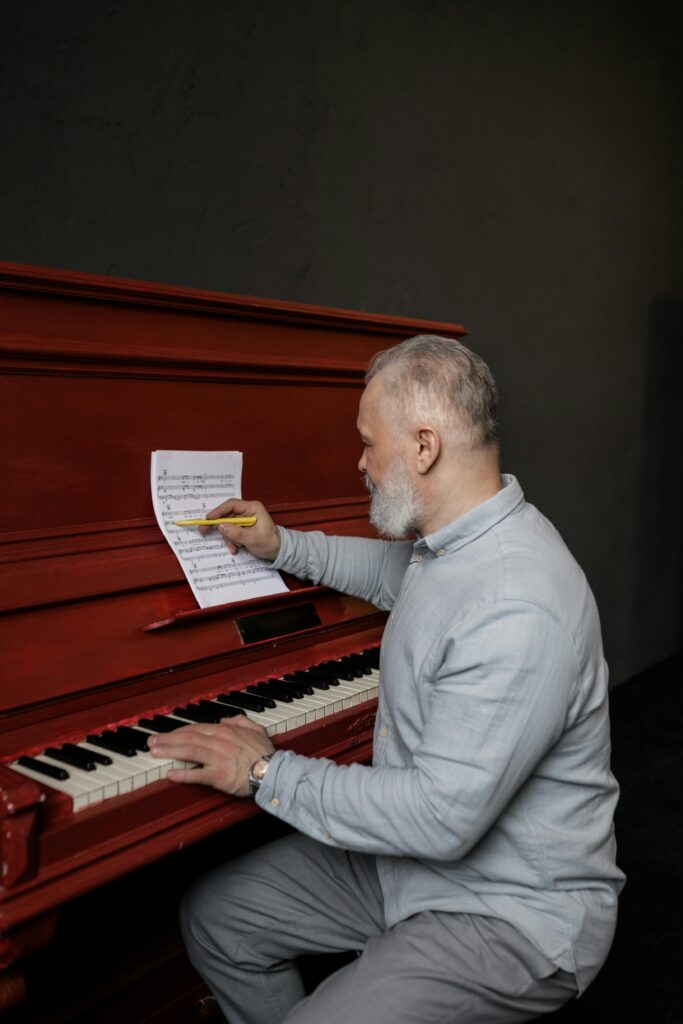
The most successful adult learners share three characteristics:
- Consistency – short daily sessions outperform infrequent long ones.
- Intention – knowing what you want to improve before you begin.
- Passion – choosing music that genuinely inspires you.
Age is not on this list because, in reality, it plays a negligible role. The adult brain is fully capable of acquiring musical skill, building coordination and developing expressive control. What matters is the quality of the process you follow.
Final Thoughts: The Best Time to Start Is Now
Learning piano as an adult is a deeply rewarding journey. It combines intellectual challenge, emotional expression and the satisfaction of watching your hands do something you once believed was impossible. Whether you have ten minutes a day or an hour, your age does not limit your potential—your mindset and consistency do.
If you’re willing to practice with intention and play the music that moves you, you can become a pianist faster than you ever expected. Your musical journey can begin at any age, and today is as good a day as any to start.