
Staying motivated is one of the biggest challenges—and one of the most essential skills—you can develop on your piano journey. While many people focus on notes, theory, or technique, they often underestimate the power of consistency, mindset, and well-structured practice.
In this article, we’ll explore actionable strategies to help you maintain enthusiasm and keep progressing, even when things get tough.
Why Motivation Matters
Motivation isn’t just a feeling—it’s a feedback loop. When you feel motivated, you practice more and with more focus. That practice leads to visible improvement. Seeing progress makes you feel more motivated.
But the opposite is also true. If your progress stalls, you start to feel stuck. You may begin skipping practice, or showing up without energy or intention. Eventually, frustration replaces joy—and the piano becomes a burden instead of a source of inspiration.
The good news? With the right mindset and strategies, you can build motivation, even when it doesn’t come naturally.
Set Clear and Meaningful Goals
Vague goals like “get better at piano” don’t provide a clear direction. Instead, define what “better” means to you. Do you want to play a specific piece? Accompany yourself while singing? Improvise blues? Compose your own music?
Choose one or two goals that feel personally meaningful—not just impressive on paper. When your goal aligns with your deeper “why,” you’ll be much more likely to push through difficult moments.
📌 Tip: Write down your goal and keep it visible in your practice space.
Break Big Goals Into Small Wins
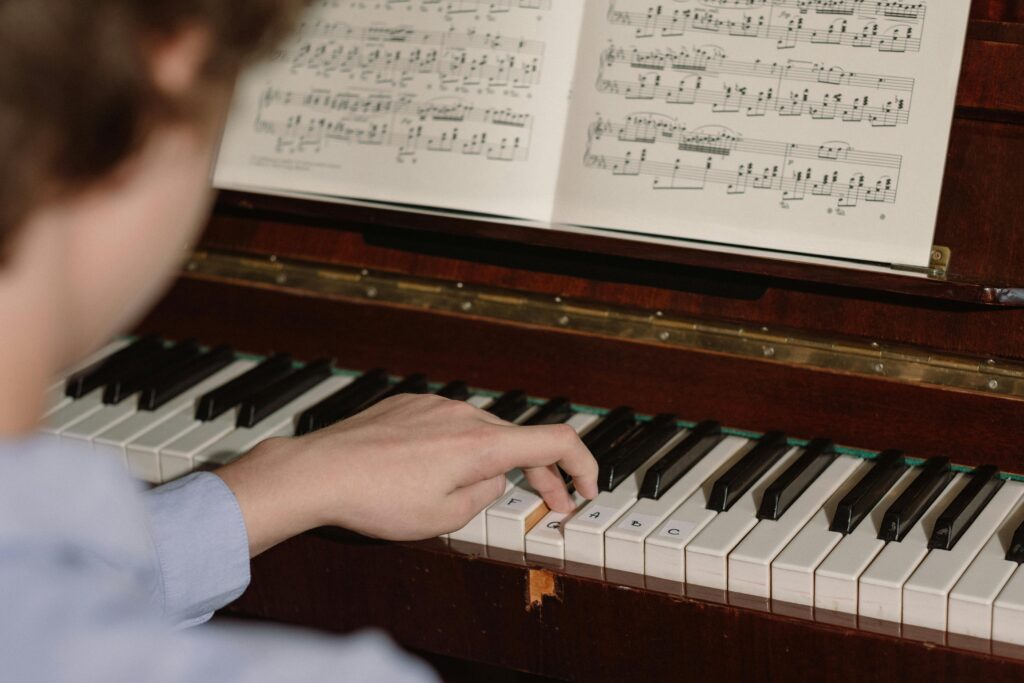
Ambitious goals are great—but they can feel overwhelming. If your goal is to learn a five-minute classical piece, don’t just start from measure 1 and hope for the best. Break it down into small, specific checkpoints.
Each mini-achievement gives you a hit of satisfaction. Finishing a section hands together, mastering a tricky passage, or playing a full page from memory—these are moments worth celebrating.
🎯 Think of progress like stacking bricks. One brick per day builds a wall.
Create a Practice Habit That Works for You
Waiting to “feel like practicing” is a recipe for inconsistency. Instead, build piano into your routine, just like brushing your teeth or making coffee. Even 10 minutes a day can create momentum—what matters is consistency, not duration.
Experiment to find your rhythm. Are you more alert in the morning or at night? Do you prefer one long session or three mini-sessions?
🕒 Tip: Set a reminder or attach piano to an existing habit (e.g., “right after lunch”).
Embrace Variety and Curiosity
If you always play the same pieces, exercises, and styles, practice can become stale. Injecting variety keeps things interesting and activates different parts of your musical brain.
Try:
- Learning a jazz chord progression if you usually play classical
- Playing a song by ear
- Composing a short melody
- Improvising with just two fingers
- Using backing tracks or rhythm loops
Music is a vast landscape—explore it.
Use Short-Term Challenges
Some people thrive with deadlines and goals. Set a one-week challenge: for example, “learn the left hand of this song by Sunday” or “play this arpeggio cleanly at 80 bpm.”
Gamifying your practice like this keeps things fresh—and gives you regular wins to celebrate. You can even invent fun rules: practice while standing, eyes closed, or with a time limit.
📈 Bonus: If you share your challenge with someone else, you’ll feel more committed.
Track Your Journey
Progress often feels invisible unless you write it down. Keeping a journal (digital or physical) helps you recognize how far you’ve come.
You can log:
- What you practiced
- What went well
- What you want to focus on next
- How you felt before and after playing
Reading past entries can lift your spirits on tough days. “Wow, I couldn’t play this two months ago!” is incredibly motivating.
Connect With Other Musicians
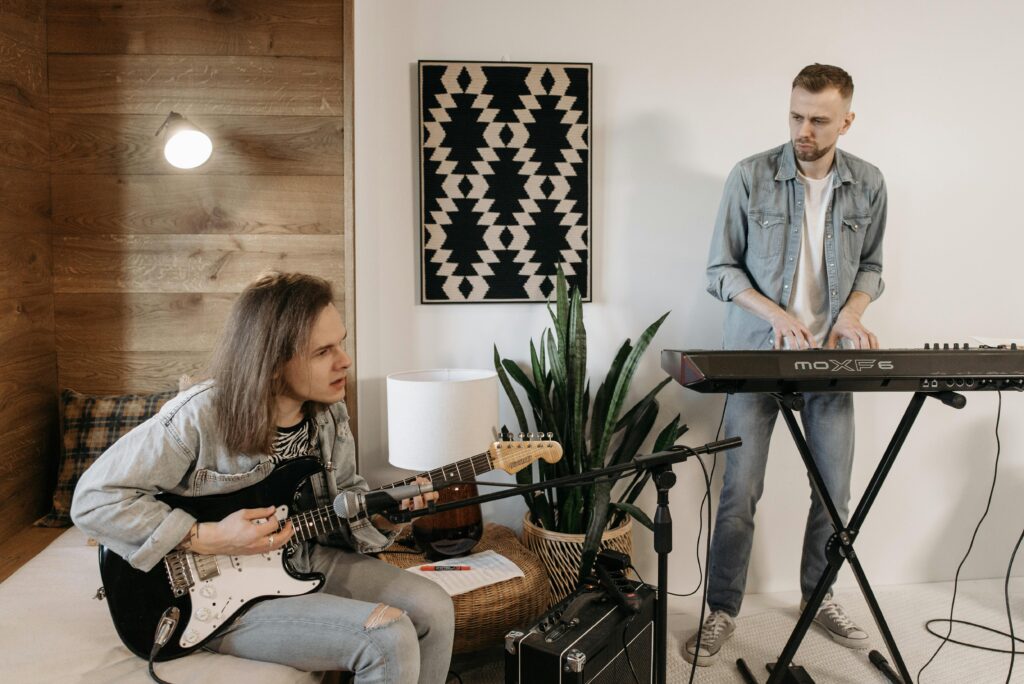
Music is meant to be shared. When you engage with a community—whether online or in person—you gain feedback, encouragement, and inspiration.
Options include:
- Joining a local piano group or ensemble
- Participating in online challenges (like #100daysofpractice)
- Posting your progress on social media
- Asking for feedback in a forum or Discord group
Other musicians remind you that you’re not alone in the ups and downs of learning.
Reignite the Spark
Sometimes motivation drops because you forget what drew you to piano in the first place. Take a moment to reconnect with that.
Rewatch the video that inspired you. Play the first song you ever learned. Close your eyes and improvise for five minutes without pressure. Remember that playing piano isn’t just a goal—it’s a source of joy.
You don’t always need to “push” harder. Sometimes you need to pause, breathe, and listen again.
Final Thoughts
Motivation isn’t something you either have or don’t have—it’s something you cultivate. Like music itself, it’s dynamic. It ebbs and flows. But with the right tools and habits, you can stay on track and even fall in love with the process.
The key is to enjoy the journey, not just the destination.
Keep showing up. Keep playing. Keep growing.