The piano is a fascinating instrument, capable of producing a wide variety of sounds and emotions. One of the keys to unlocking its full potential lies in understanding and harnessing the power of musical modes. These modes, also known as “ecclesiastical modes” or “Greek modes,” have a rich history dating back to Ancient Greece and were widely used in Western religious music from the 9th to the 16th century. They offer pianists a unique set of notes and intervals to work with, enabling the creation of diverse harmonies and melodies. Modes can be found across many musical genres, from classical to folk and popular music.es Are Used on the Piano
The Versatility of Modes on the Piano
Exploring modes on the piano is like opening a box of musical colors—each mode has its own unique palette of emotions and atmospheres. These modes act like the brushes a painter uses to craft their masterpiece, and pianists can bring a wide range of moods and feelings to life through them. The true magic of modes lies in where you choose to begin on the keyboard.
Imagine the piano keyboard as a blank canvas. Each mode starts on a different note, and that note becomes your starting point to create a unique musical experience. By making that choice, you unlock a world of sonic and emotional possibilities. It’s like choosing the setting for your musical journey: do you want to dive into the deep melancholy of the Dorian mode, or explore the exotic tension of the Phrygian mode?
Modes are versatile tools that allow musicians to paint with notes, weaving moods that range from euphoric to introspective. They are music’s secret language, capable of conveying emotions that words can only dream of. Every note you play in a mode tells a story, and every chord expresses your deepest feelings.
How Modes Are Used on the Piano
Piano modes are used across a wide range of genres and musical styles, each offering a unique emotional and atmospheric palette:
In Classical Music
In classical music, modes were widely used during the Baroque period to create various emotional effects. For example, the Dorian mode was often used to evoke melancholy or sadness, while the Lydian mode was chosen to infuse brightness and excitement into compositions.
In Jazz
Jazz musicians often use modes as a foundation for improvisation and composition. Jazz pianists frequently rely on these modes to create solos or entirely new pieces, drawing on their distinct sounds and tonal colors.
In Popular Music
Popular music is no stranger to the charm of modes. Specific modes are employed to set the mood or atmosphere of a song. For instance, the Mixolydian mode is commonly used in blues to create a distinctive “bluesy” feel, while the Phrygian mode adds an exotic, sensual touch often heard in flamenco music.
The Seven Modes on Piano
Ionian Mode
Also known as the major scale, it has a bright and open sound associated with feelings of triumph and glory. The Ionian mode serves as the “default” mode in Western music and is used across various musical genres. This mode eventually became what we know today as the Major Scale.
You can build an Ionian scale from any major scale by starting on its first note. That’s why it’s the same as the major scale itself. You can also create it using its own pattern: W W H W W W H
(W = whole step, H = half step)
Let’s see an example in the C scale:
- C Ionian
- Notes: C, D, E, F, G, A, B, C
- Right hand: 1 2 3 – 1 2 3 4 – 5
- Left hand: 5 – 4 3 2 1 – 3 2 1
- Sound: Happy and joyful, evokes a sense of celebration and positivity.
Dorian Mode
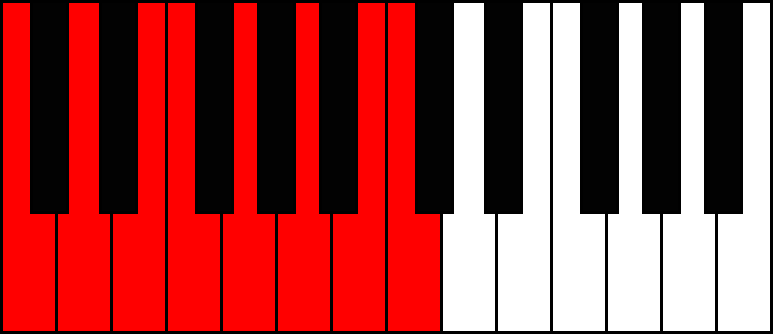
The Dorian mode is named after the ancient Greek region of Doris. Starting on the second degree of the natural minor scale, it has a distinct minor sound but includes a raised sixth degree, giving it a unique feeling of melancholy or longing. This mode is widely found in jazz, blues, rock, and gospel.
You can build a Dorian scale from any major scale by starting on its second note. For example, using the C major scale (all white keys), if you build a scale starting on its second degree (D), you are playing D Dorian. Alternatively, it can be created using this pattern: W H W W W H W
Let’s see an example in the C scale:
- C Dorian
- Notes: C, D, E♭, F, G, A, B♭, C
- Right hand: 1 2 3 – 1 2 3 4 – 5
- Left hand: 5 – 4 3 2 1 – 3 2 1
- Sound: Epic and energetic with a slightly darker, melodic tone.
Phrygian Mode
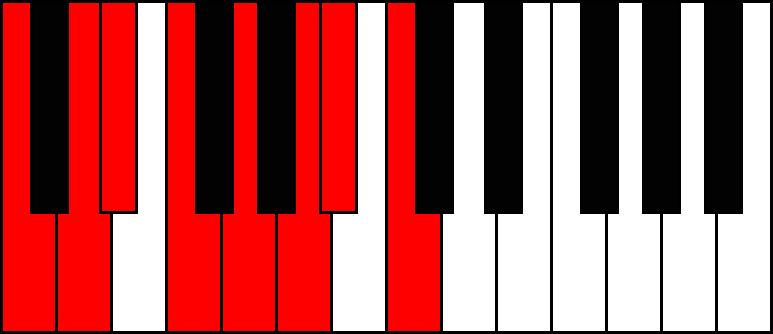
Originating from the third degree of the natural minor scale, the Phrygian mode is characterized by a specific pattern of whole and half steps that create a distinctive Spanish or Middle Eastern sound. Its lowered second degree is key to its mysterious and tense feel.
You can build a Phrygian scale from any major scale by starting on its third note. For example, using the C major scale (all white keys), if you start on the third degree (E), you’re playing E Phrygian. Or you can use this pattern: H W W W H W W
Let’s see an example in the C scale:
- C Phrygian
- Notes: C, D♭, E♭, F, G, A♭, B♭, C
- Right hand: 1 2 3 – 1 2 3 4 – 5
- Left hand: 5 – 4 3 2 1 – 3 2 1
- Sound: Dark and exotic, perfect for suspenseful or mysterious music.
Lydian Mode
With its bright and ethereal sound attributed to a raised fourth degree, the Lydian mode is a favorite in jazz and classical music. Named after the ancient Greek region of Lydia, it conveys feelings of joy and optimism.
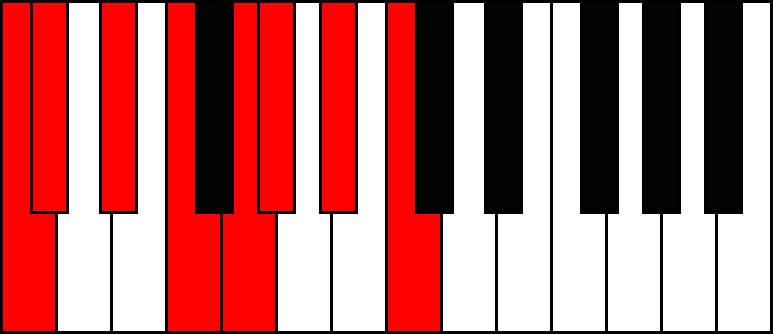
You can build a Lydian scale from any major scale by starting on its fourth note. For example, using the C major scale (all white keys), if you begin on its fourth degree (F), you’re playing F Lydian. Or you can use this pattern: W W W H W W H
Let’s see an example in the C scale:
- C Lydian
- Notes: C, D, E, F♯, G, A, B, C
- Right hand: 1 2 3 – 1 2 3 4 – 5
- Left hand: 5 – 4 3 2 1 – 3 2 1
- Sound: Radiant and dreamy, like a musical fairytale.
Mixolydian Mode
Starting on the fifth degree of the major scale, the Mixolydian mode features a distinctive pattern that gives it a bluesy, relaxed sound due to its lowered seventh degree. Musicians across genres use it to evoke specific moods and emotions.
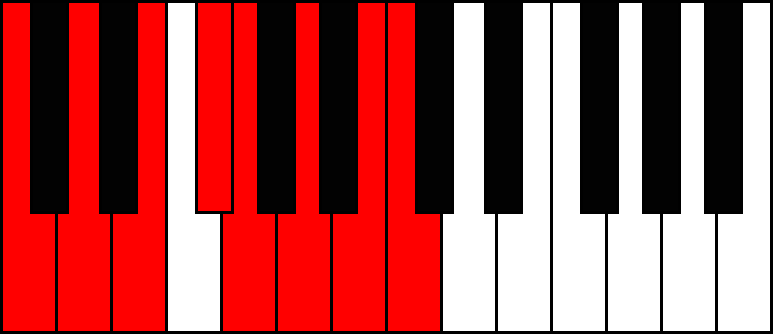
You can build a Mixolydian scale from any major scale by starting on its fifth note. For example, using the C major scale (all white keys), starting from the fifth degree (G) gives you G Mixolydian. Or you can use this pattern: W W H W W H W
Let’s see an example in the C scale:
- C Mixolydian
- Notes: C, D, E, F, G, A, B♭, C
- Right hand: 1 2 3 – 1 2 3 4 – 5
- Left hand: 5 – 4 3 2 1 – 3 2 1
- Sound: Heroic and groovy, with a touch of mystery.
Aeolian Mode
Also known as the natural minor scale, the Aeolian mode begins on the sixth degree of the major scale. Its unique pattern of whole and half steps is often used to convey a sad or melancholic mood in music. This mode became what we know today as the Natural Minor Scale.
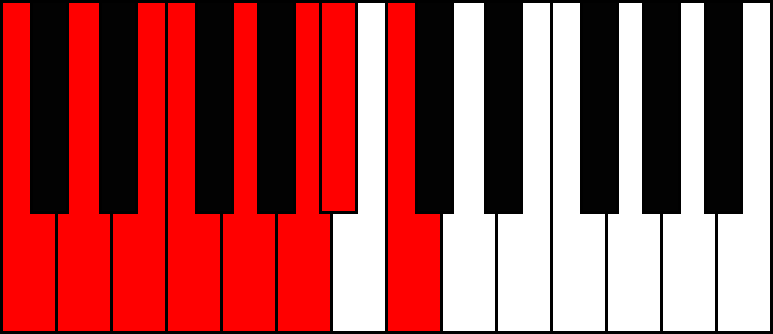
You can build an Aeolian scale from any major scale by starting on its sixth note. For example, using the C major scale (all white keys), starting on its sixth degree (A) gives you A Aeolian (or A minor). Or you can use this pattern: W H W W H W W
Let’s see an example in the C scale:
- C Aeolian
- Notes: C, D, E♭, F, G, A♭, B♭, C
- Right hand: 1 2 3 – 1 2 3 4 – 5
- Left hand: 5 – 4 3 2 1 – 3 2 1
- Sound: Melancholic and emotional, often nostalgic.
Locrian Mode
The Locrian mode, the least common of the seven, offers a dissonant and unstable character. With both its second and fifth degrees lowered, it is mainly used for special effects or to create a sense of tension or instability in musical compositions.
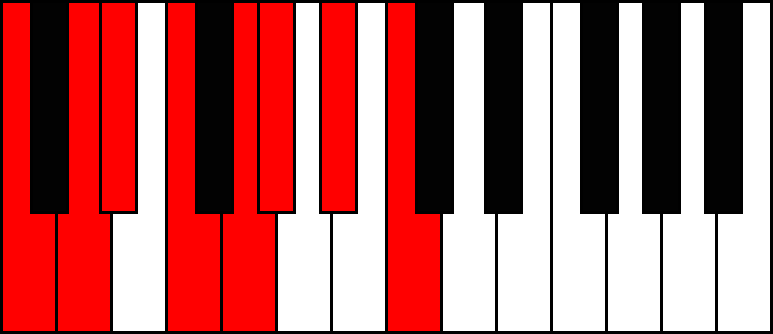
You can build a Locrian scale from any major scale by starting on its seventh note. For example, using the C major scale (all white keys), starting from its seventh degree (B) gives you B Locrian. Or you can use this pattern: H W W H W W W
Let’s see an example in the C scale:
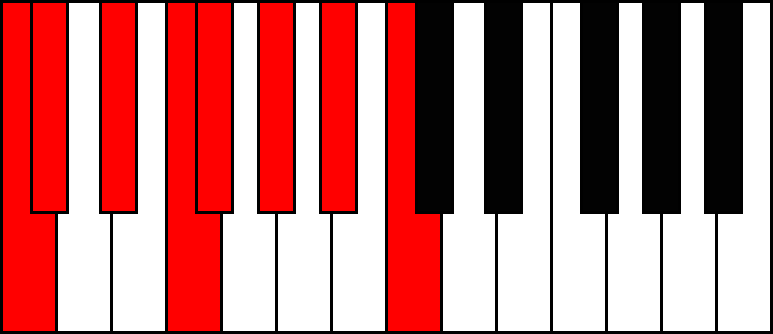
- C Locrian
- Notes: C, D♭, E♭, F, G♭, A♭, B♭, C
- Right hand: 1 2 3 – 1 2 3 4 – 5
- Left hand: 5 – 4 3 2 1 – 3 2 1
- Sound: Uneasy and tense, like a suspenseful movie soundtrack.
A Historical Journey
The history of musical modes is as rich and diverse as the modes themselves. Rooted in Ancient Greece, the concept of modes was systematically classified by the philosopher and mathematician Pythagoras, who divided the octave into intervals and named them after different Greek regions.
In the Middle Ages, the Catholic Church further developed the concept of musical modes, using them to create Gregorian chant melodies. Each mode was assigned a specific purpose—be it for liturgy, meditation, or the expression of emotions such as joy or sorrow.
During the Renaissance, modes expanded their role in Western music and became a core part of the compositional process. Renowned composers such as Giovanni Gabrieli and Claudio Monteverdi used different modes to create diverse emotional effects.
As Western music evolved, modes became less commonly used, and major and minor tonalities became dominant. However, modes continued to thrive in folk music and various world music traditions.
In the 20th century, modes experienced a revival in the Western world, especially in jazz, where they were used to create unique harmonies and chord progressions. Modes remain essential in both traditional and contemporary music around the world, including musical traditions from the Middle East and Africa.
In conclusion, the world of modes on the piano is captivating and multifaceted. These musical tools allow pianists to access a wide spectrum of emotions and atmospheres, enriching their musical expression.