Piano scales are incredibly valuable tools for any pianist—from the newest beginner to the most experienced professional. They provide the technical and theoretical foundation to help you understand the patterns that make up any style of Western music.
Practicing scales will drastically improve your knowledge and technique at the piano, giving you an essential toolkit that simplifies your entire learning process.
But before diving into scales, it’s important to understand finger numbering to know how to play them correctly.
Finger Numbering
You’ll often see numbers assigned to each key or note in sheet music, lessons, or tutorials. These numbers correspond to the fingers you should use to press each key. Finger numbers are assigned to make it easier to learn new pieces or songs.
The numbers go from 1 to 5 and are assigned as follows:
1 = Thumb
2 = Index
3 = Middle
4 = Ring
5 = Pinky
In the image below, you can see how the numbers are laid out for each hand:
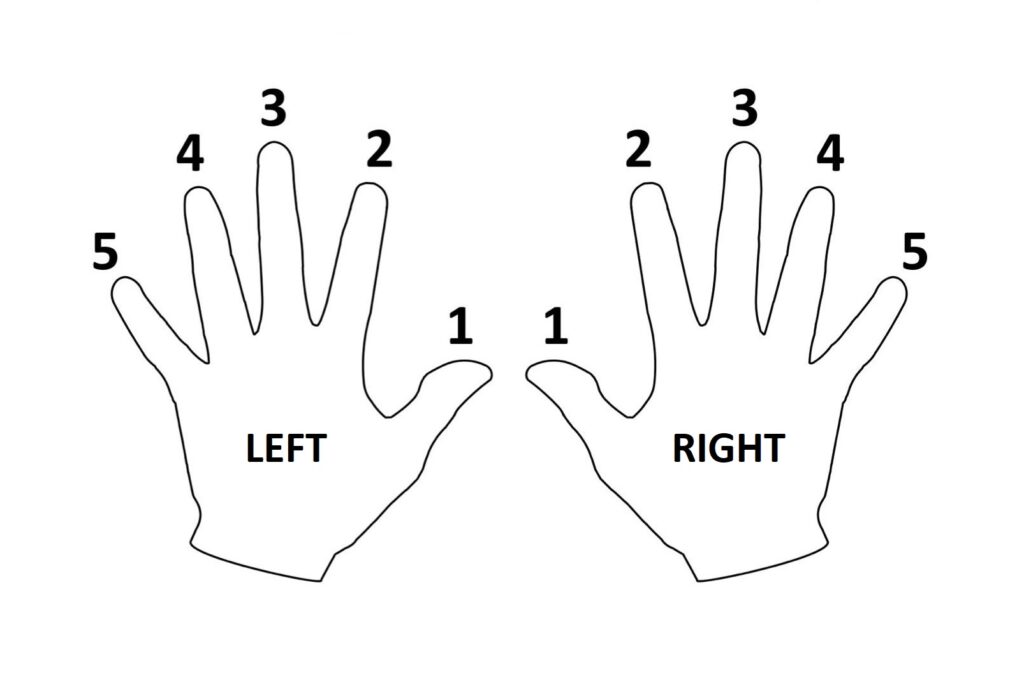
The numbering system is the same for both hands—what changes is the position of the fingers on each hand.
What Are Scales and Why Are They Important?
A scale is simply a selection of notes. They are the building blocks used to create melodies and musical ideas. Scales are ordered sets of notes that, when played in various combinations, become recognizable music.
Scales are important because they appear (in many variations and combinations) in music all the time. Whether you’re playing classical, jazz, rock, Broadway tunes, or Christmas carols—no matter your level—you will find scales in your music.
Since you’re very likely to encounter scales in the music you play, it’s extremely useful to have scale patterns “programmed” into your fingers, like templates you can use at will. That way, you won’t have to learn everything from scratch. If you already know the scale patterns, you already understand a significant portion of any new piece you begin learning. Naturally, this makes you a much faster learner and makes the learning process far more efficient and enjoyable.
How to Build Scales on the Piano
There are 12 notes on the keyboard, which repeat systematically. Each note is separated by a distance of one semitone, which is half a whole tone. (Semi = half.) So, 1 whole tone = 2 semitones.
Scales are simply selections of these 12 notes, built using specific patterns of intervals on the keyboard. The most common types of scales are major and minor scales. Each has a distinct set of characteristics. Let’s start with the major scales.
Structure of Major Scales
Major piano scales are the most common type of scale. A major scale is defined by its specific pattern of intervals.
The major scale follows a fixed sequence of whole steps (major seconds) and half steps (minor seconds). The pattern is:
W–W–H–W–W–W–H
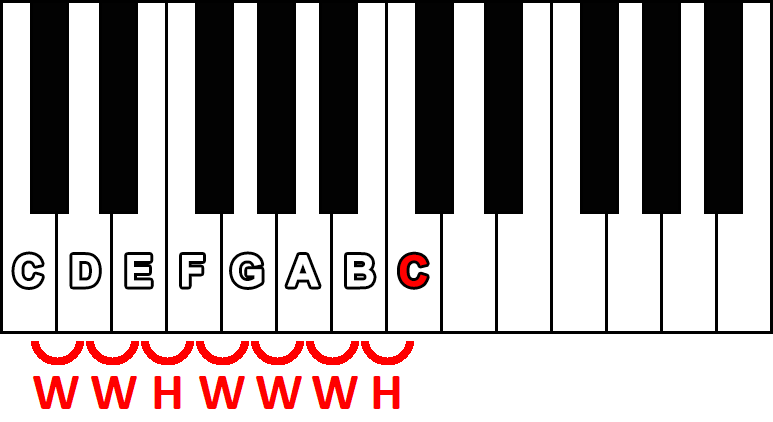
(W = whole step, H = half step)
No matter which key you’re in, this pattern of whole and half steps stays the same. That’s why all major scales have a similar sound.
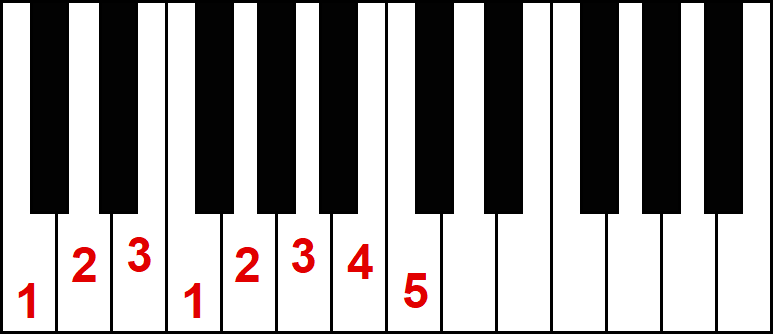
To play it with the right hand, use the following fingers:
1-2-3-1-2-3-4-5
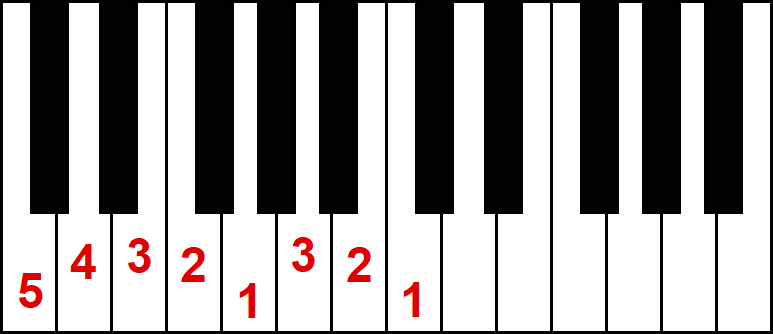
For the left hand, starting with the pinky, the pattern is:
5-4-3-2-1-3-2-1
The 12 Major Scales
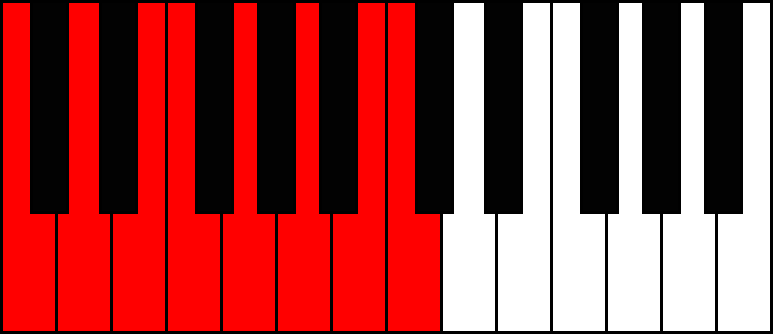
C Major:
- Notes: C, D, E, F, G, A, B, C
- Right hand: 1 2 3 – 1 2 3 4 – 5
- Left hand: 5 – 4 3 2 1 – 3 2 1
G Major:
- Notes: G, A, B, C, D, E, F♯, G
- Right hand: 1 2 3 – 1 2 3 4 – 5
- Left hand: 5 – 4 3 2 1 – 3 2 1
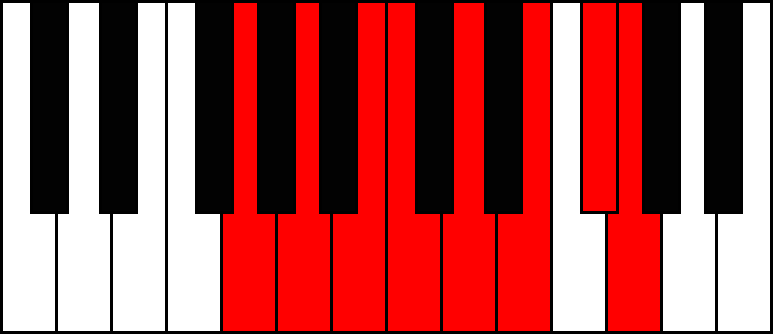
D Major:
- Notes: D, E, F♯, G, A, B, C♯, D
- Right hand: 1 2 3 – 1 2 3 4 – 5
- Left hand: 5 – 4 3 2 1 – 3 2 1
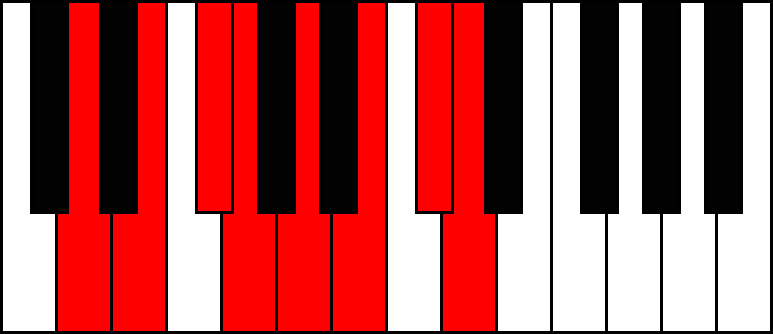
A Major:
- Notes: A, B, C♯, D, E, F♯, G♯, A
- Right hand: 1 2 3 – 1 2 3 4 – 5
- Left hand: 5 – 4 3 2 1 – 3 2 1
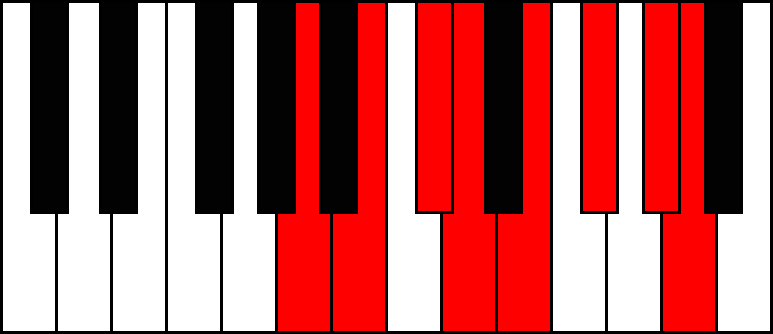
E Major:
- Notes: E, F♯, G♯, A, B, C♯, D♯, E
- Right hand: 1 2 3 – 1 2 3 4 – 5
- Left hand: 5 – 4 3 2 1 – 3 2 1
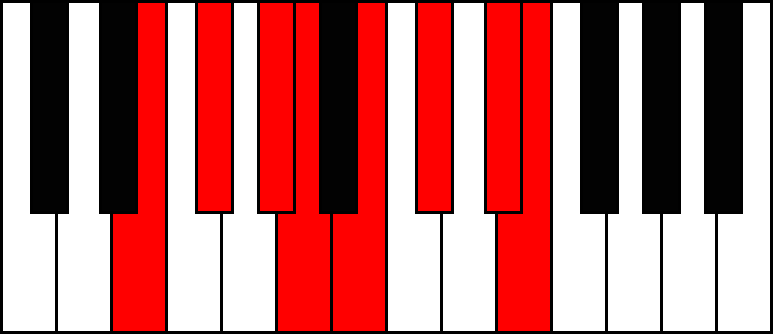
B Major:
- Notes: B, C♯, D♯, E, F♯, G♯, A♯, B
- Right hand: 1 2 3 – 1 2 3 4 – 5
- Left hand: 4 3 2 1 – 4 3 2 1
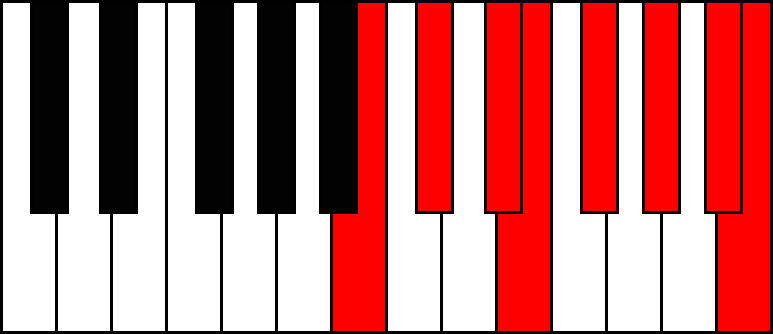
G♭ Major:
- Notes: G♭, A♭, B♭, C♭, D♭, E♭, F, G♭
- Right hand: 2 3 4 – 1 2 3 – 1 2
- Left hand: 4 3 2 1 – 3 2 1 – 4
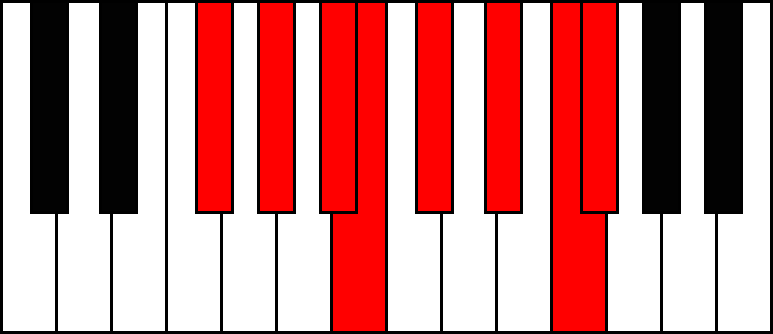
D♭ Major:
- Notes: D♭, E♭, F, G♭, A♭, B♭, C, D♭
- Right hand: 2 3 – 1 2 3 4 – 1 2
- Left hand: 3 2 1 – 4 3 2 1 – 4
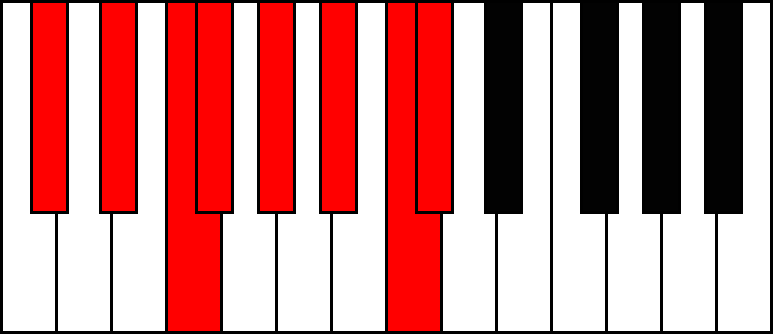
A♭ Major:
- Notes: A♭, B♭, C, D♭, E♭, F, G, A♭
- Right hand: 3 4 – 1 2 3 – 1 2 3
- Left hand: 3 2 1 – 4 3 2 1 – 3
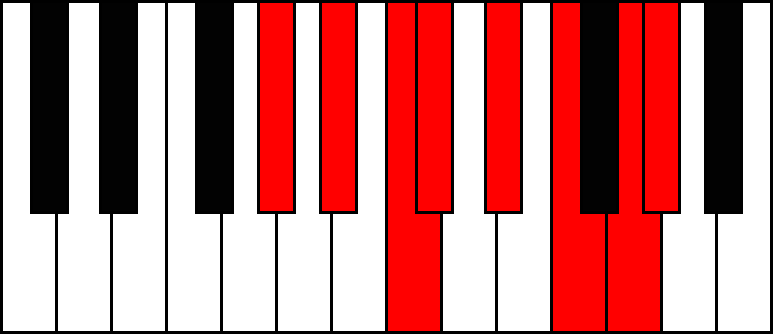
E♭ Major:
- Notes: E♭, F, G, A♭, B♭, C, D, E♭
- Right hand: 3 – 1 2 3 4 – 1 2 3
- Left hand: 3 2 1 – 4 3 2 1 – 3
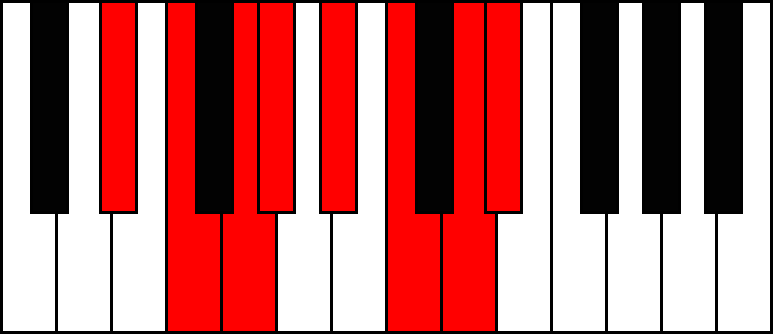
B♭ Major:
- Notes: B♭, C, D, E♭, F, G, A, B♭
- Right hand: 4 – 1 2 3 – 1 2 3 4
- Left hand: 3 2 1 – 4 3 2 1 – 3
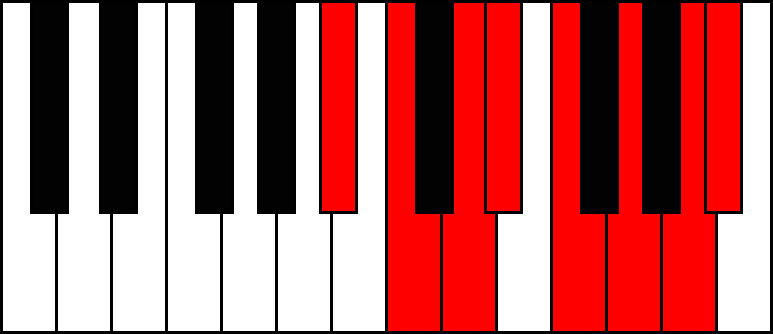
F Major:
- Notes: F, G, A, B♭, C, D, E, F
- Right hand: 1 2 3 4 – 1 2 3 4
- Left hand: 5 – 4 3 2 1 – 3 2 1
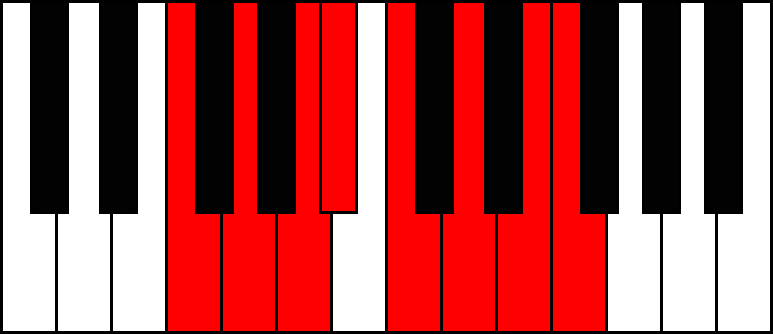
Structure of Minor Scales
Minor scales come in three forms:
- Natural Minor
- Harmonic Minor
- Melodic Minor
The natural minor scale retains the notes from the key signature. This version is mainly used for theoretical purposes and is rarely heard in actual music. This is because it lacks a leading tone (a semitone below the tonic) that gives direction and resolution. The interval pattern for the natural minor scale is: W-H-W-W-H-W-W.
The harmonic minor scale raises the 7th degree to provide the leading tone missing from the natural form. This version of the minor scale is much more common in practice. The interval pattern of the harmonic minor scale is: W-H-W-W-H-A2-H. (“A2” refers to an augmented 2nd interval, resulting from the raised 7th degree.)
The melodic minor scale is unique and a bit tricky to grasp at first. This is because it is played differently depending on whether you’re ascending or descending. In the melodic minor scale, both the 6th and 7th degrees are raised when ascending, but when descending, the scale reverts to the natural minor form. The interval pattern for the ascending melodic minor is: W-H-W-W-W-W-H, and for the descending melodic minor: W-H-W-W-H-W-W, which is identical to the natural minor pattern.
In each scale lesson below, you’ll find detailed instructions for playing and understanding each of the three versions of the minor scales. But to simplify, the following list shows the natural minor version of each scale.
The 12 Minor Scales
A Minor:
- Notes: A, B, C, D, E, F, G, A
- Right hand: 1 2 3 – 1 2 3 4 – 5
- Left hand: 5 – 4 3 2 1 – 3 2 1
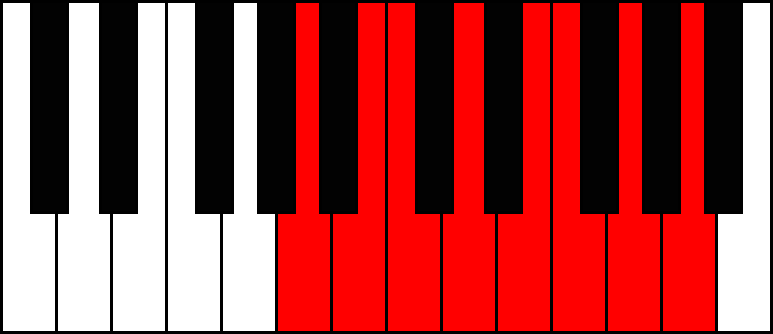
E Minor:
- Notes: E, F♯, G, A, B, C, D, E
- Right hand: 1 2 3 – 1 2 3 4 – 5
- Left hand: 5 – 4 3 2 1 – 3 2 1
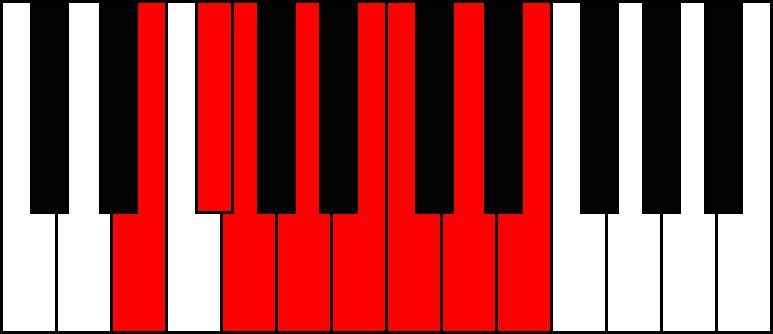
B Minor:
- Notes: B, C♯, D, E, F♯, G, A, B
- Right hand: 1 2 3 – 1 2 3 4 – 5
- Left hand: 4 3 2 1 – 4 3 2 1
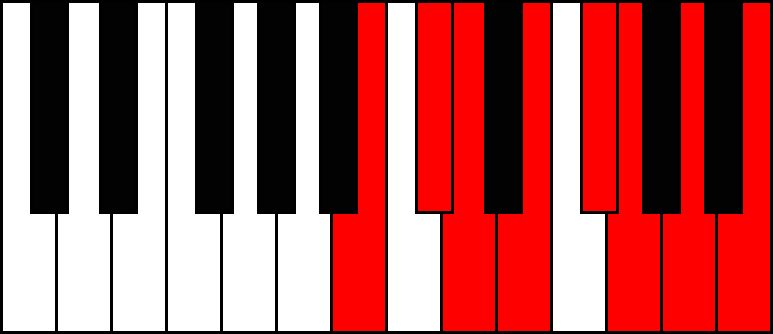
F♯ Minor:
- Notes: F♯, G♯, A, B, C♯, D, E, F♯
- Right hand: 3 4 – 1 2 3 – 1 2 3
- Left hand: 4 3 2 1 – 3 2 1 – 4
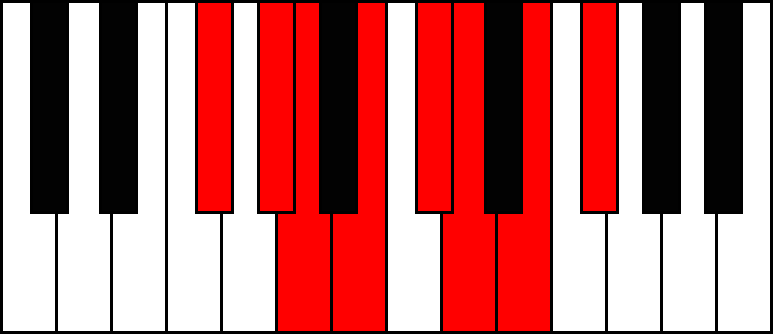
C♯ Minor:
- Notes: C♯, D♯, E, F♯, G♯, A, B, C♯
- Right hand: 3 4 – 1 2 3 – 1 2 3
- Left hand: 3 2 1 – 4 3 2 1 – 3
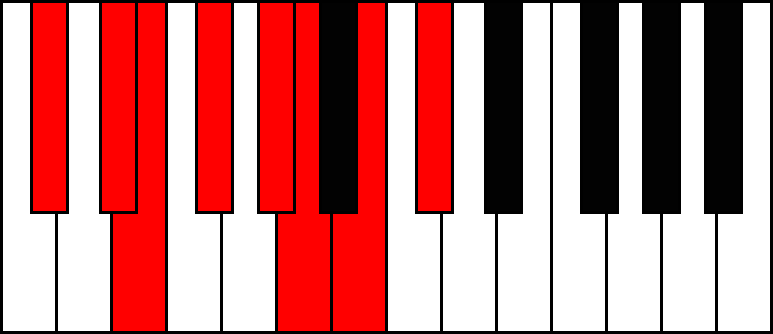
G♯ Minor:
- Notes: G♯, A♯, B, C♯, D♯, E, F♯, G♯
- Right hand: 3 4 – 1 2 3 – 1 2 3
- Left hand: 3 2 1 – 4 3 2 1 – 3
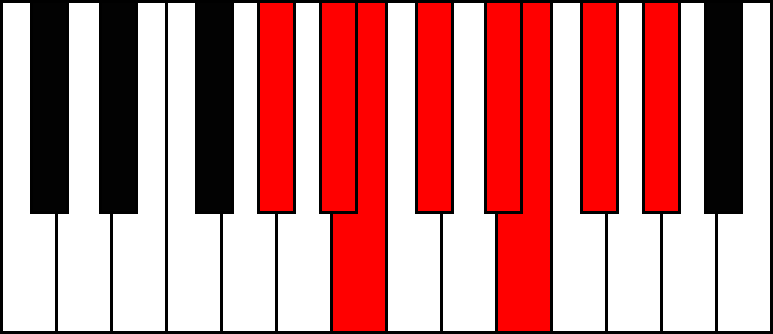
F Minor:
- Notes: F, G, A♭, B♭, C, D♭, E♭, F
- Right hand: 1 2 3 4 – 1 2 3 4
- Left hand: 5 – 4 3 2 1 – 3 2 1
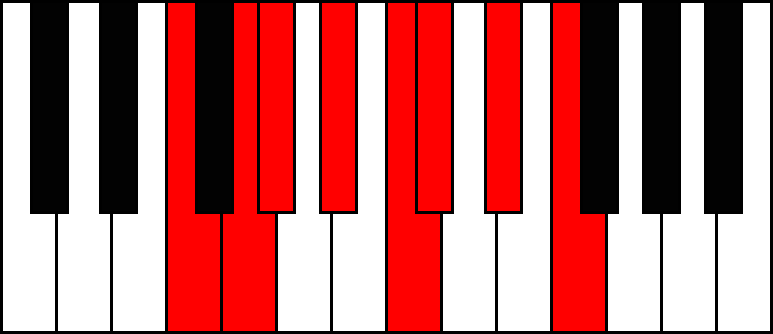
C Minor:
- Notes: C, D, E♭, F, G, A♭, B♭, C
- Right hand: 1 2 3 – 1 2 3 4 – 5
- Left hand: 5 – 4 3 2 1 – 3 2 1
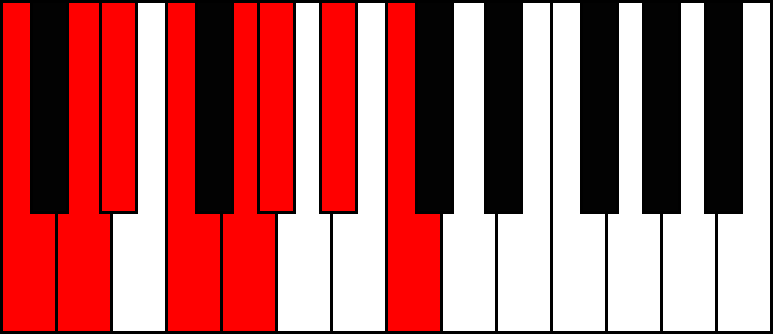
G Minor:
- Notes: G, A, B♭, C, D, E♭, F, G
- Right hand: 1 2 3 – 1 2 3 4 – 5
- Left hand: 5 – 4 3 2 1 – 3 2 1
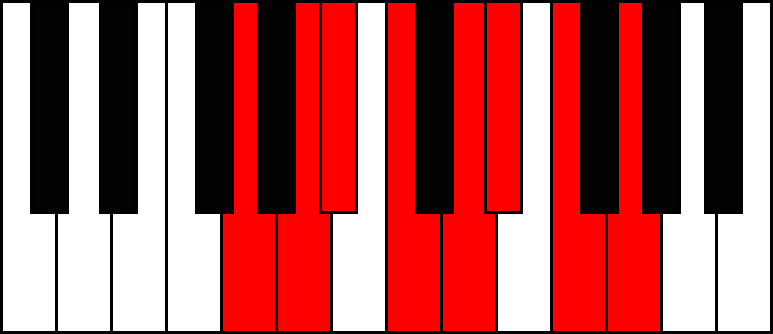
D Minor:
- Notes: D, E, F, G, A, B♭, C, D
- Right hand: 1 2 3 – 1 2 3 4 – 5
- Left hand: 5 – 4 3 2 1 – 3 2 1
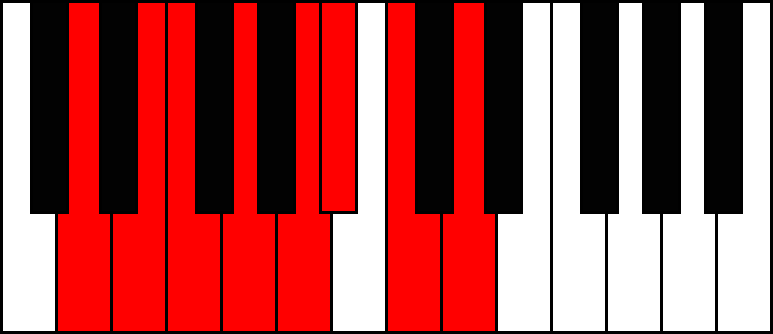
B♭ Minor:
- Notes: B♭, C, D♭, E♭, F, G♭, A♭, B♭
- Right hand: 4 – 1 2 3 – 1 2 3 4
- Left hand: 2 1 – 3 2 1 – 4 3 2
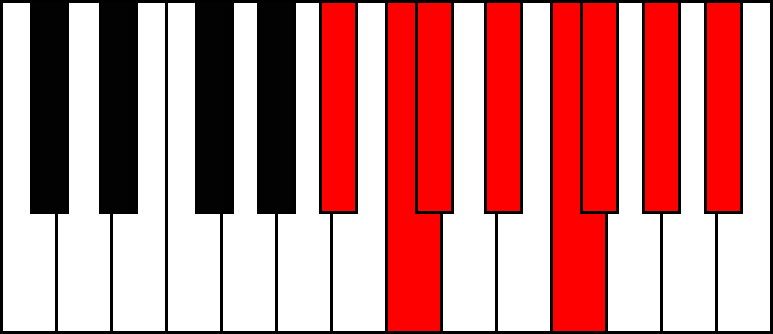
E♭ Minor:
- Notes: E♭, F, G♭, A♭, B♭, C♭, D♭, E♭
- Right hand: 3 – 1 2 3 4 – 1 2 3
- Left hand: 2 1 – 4 3 2 1 – 3 2
Other Common Scale Types
Chromatic Scale:
The chromatic scale includes every note on the keyboard and ascends or descends entirely by half steps. The fingering is simple and straightforward.
Blues Scale:
The blues scale is a six-tone progression commonly used not only in blues but also in jazz, rock, country, and even classical music. Essentially, the blues scale is a form of the pentatonic scale (five notes) with a single added chromatic note—often called the “blue note”—which is a diminished 5th or augmented 4th above the tonic. For example, in a C blues scale, the notes are: C, E♭, F, F♯, G, B♭, with F♯ being the “blue note.”
Whole Tone Scale:
Whole tone scales, as the name implies, consist entirely of whole steps and contain no half steps. This makes them sound very open and ambiguous, ideal for creating unique atmospheric effects on the piano.
Pentatonic Scales:
The term “pentatonic” simply means five notes, and pentatonic scales come in many variations and are used for different reasons across musical styles. One of the simplest pentatonic scales can be played using only the black keys of the piano.
Modal Scales:
Modes, or modal scales—sometimes called church modes—have their roots in medieval music but are commonly used today in pop, rock, and jazz. Two of these modes, Ionian and Aeolian, became what we now call the major and minor scales. The remaining modes are Dorian, Phrygian, Lydian, Mixolydian, and Locrian.
For a more detailed exploration of modes, check out the Complete Guide to Piano Modes.